
Outer Wilds Planets: A Guide to Every World and Moon
Explore Outer Wilds planets, moons, and space stations with useful tips for shifting sand, collapsing terrain, ocean storms, and the 22-minute time loop.
Jump to
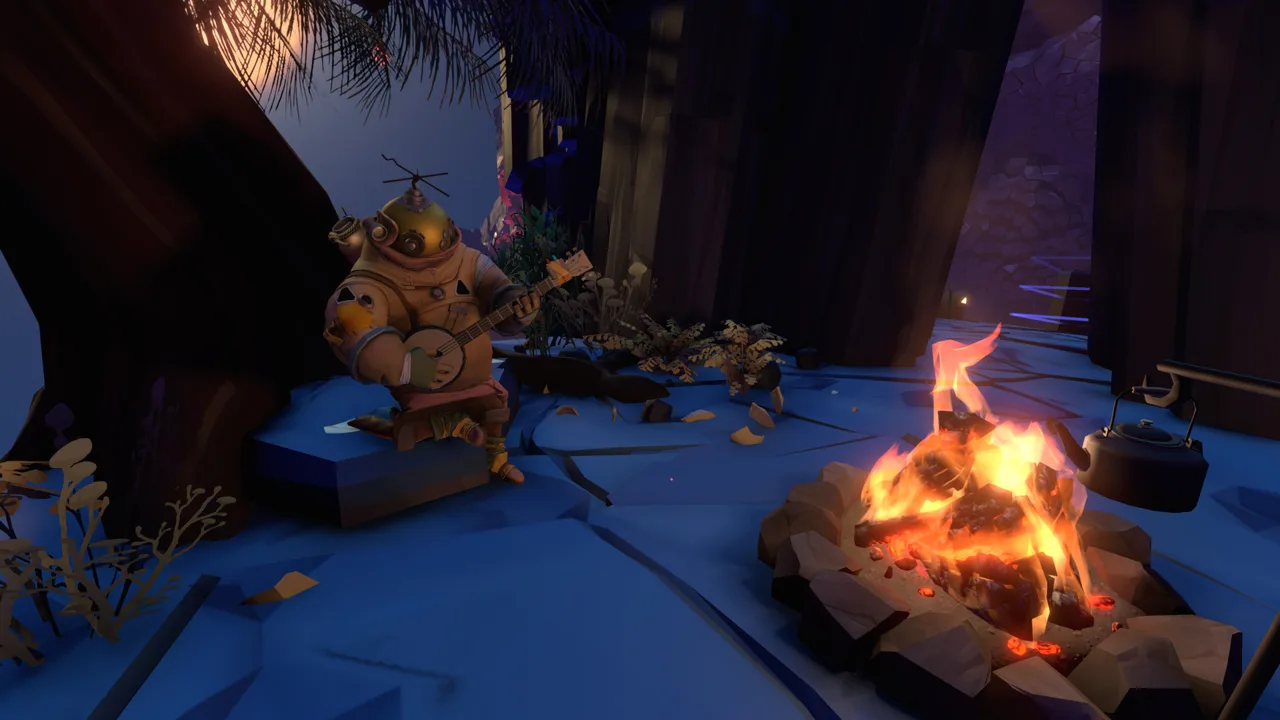
Which Planets Can You Explore?
The Outer Wilds planets keep changing while you explore: caves fill with sand, islands launch skyward, and entire stretches of ground collapse. Where you land matters, but when you arrive can decide whether a route is open. You can travel to the main worlds from your first expedition, so follow whatever catches your attention without waiting to unlock another planet.
Your main planetary destinations are:
- Ash Twin and Ember Twin, collectively called the Hourglass Twins.
- Timber Hearth, your forested homeworld.
- Brittle Hollow, a rocky planet collapsing around a black hole.
- Giant's Deep, an ocean world battered by cyclones.
- Dark Bramble, a shattered world containing a disorienting network of warped spaces.
Moons, a comet, and artificial stations offer additional places to investigate. Their discoveries connect with the Nomai ruins scattered across the planets, making a small destination worth revisiting when you learn something elsewhere.
The solar system runs on a 22-minute time loop that ends with the Sun going supernova. Your ship's log preserves discoveries between loops, giving you a growing record of clues even when an expedition ends abruptly.
Official page: Outer Wilds (mobiusdigitalgames.com)
Hourglass Twins: Two Worlds on Opposite Schedules
Ash Twin and Ember Twin orbit each other, with a stream of sand connecting them. During the loop, sand moves from Ash Twin to Ember Twin, changing access on both worlds.
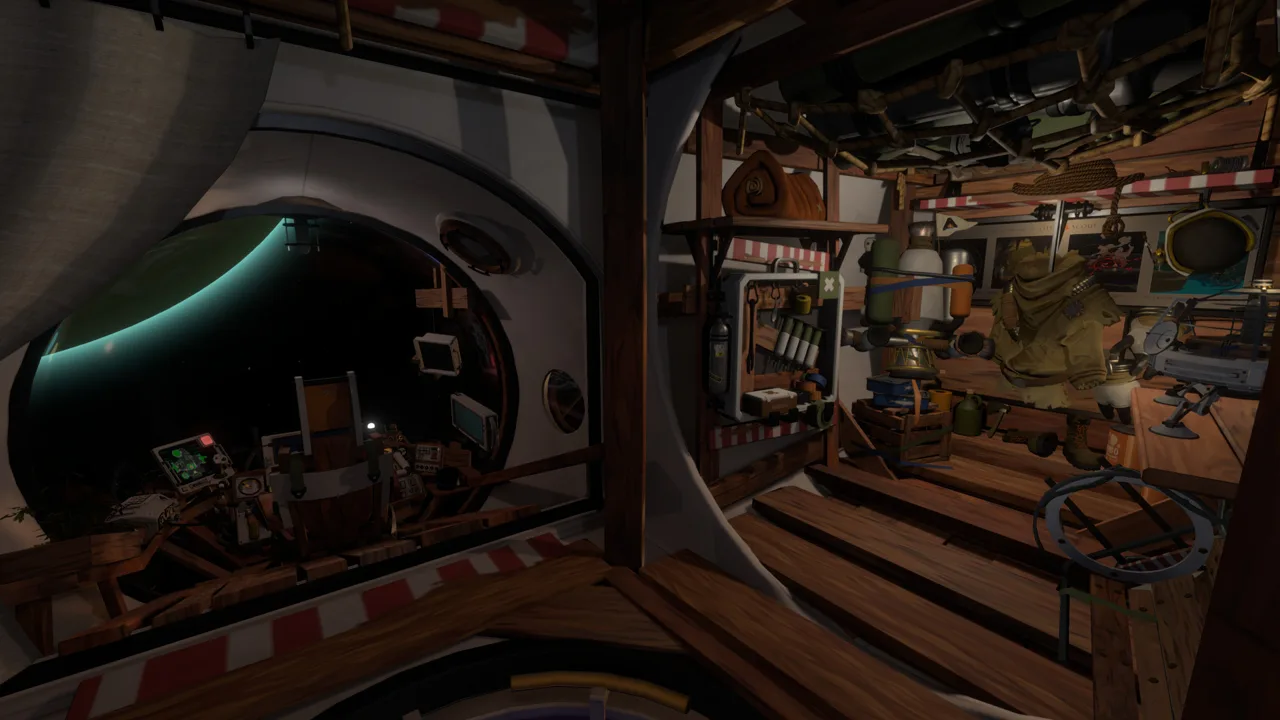 Image: Steam / Mobius Digital
Ember Twin
Ember Twin has a rocky desert surface above an extensive cave network. As sand arrives, underground passages and Nomai locations gradually fill.
Head there early when your goal is underground exploration. Time spent wandering the surface gives the sand more opportunity to block the caves below. Pick a specific lead from your ship's log before leaving Timber Hearth so you can spend more of the loop investigating it.
If a passage becomes inaccessible, return during an earlier part of another loop.
Ash Twin
Ash Twin begins covered in sand. As that sand drains away, buried Nomai architecture emerges.
Revisit Ash Twin later if your initial landing reveals little to explore. Watch what becomes exposed as the surface changes. The same process that closes routes on Ember Twin opens possibilities here, so give each twin its own visit rather than expecting both to reward the same arrival time.
Timber Hearth and the Attlerock: Look Beyond the Launchpad
Timber Hearth is the Hearthians' home planet and your starting point at the beginning of each loop. Its forests, grassy terrain, mountains, and craters surround a substantial network of submerged caverns.
Return to investigate the landscape beyond the village. Geysers provide openings into the underground network, making the homeworld more than a place to collect your ship. Examine those openings with your scout before committing to a descent.
Timber Hearth's moon, the Attlerock, contains a large impact crater and an outpost from the early days of Hearthian space exploration. Its compact surface gives you another destination for investigating the space program's history.
Use your signalscope to follow audio transmissions, and talk to the travelers you find. Their conversations and the surrounding ruins give your next flight a purpose.
Brittle Hollow: Explore Above and Below the Crust
Brittle Hollow's most striking feature sits beneath your feet: a black hole occupies its hollow center. Nomai structures extend across both the surface and the underside of the crust.
 Image: Steam / Mobius Digital
Its volcanic moon, Hollow's Lantern, bombards the planet with lava projectiles. Over time, sections of crust break away and fall into the black hole, taking their structures with them.
Visit early when you want to investigate a particular section before it collapses. Look beneath the surface as well as across it; substantial parts of the planet's architecture occupy the interior.
Falling into the black hole transports you to the white hole near the outskirts of the solar system. The nearby White Hole Station provides a way to warp back to Brittle Hollow. If you fall, investigate your new surroundings before abandoning the expedition.
Hollow's Lantern changes too. Its lava supply diminishes over the loop, so return at a different time to inspect terrain that was previously submerged.
Giant's Deep: Moving Islands and Ocean Hazards
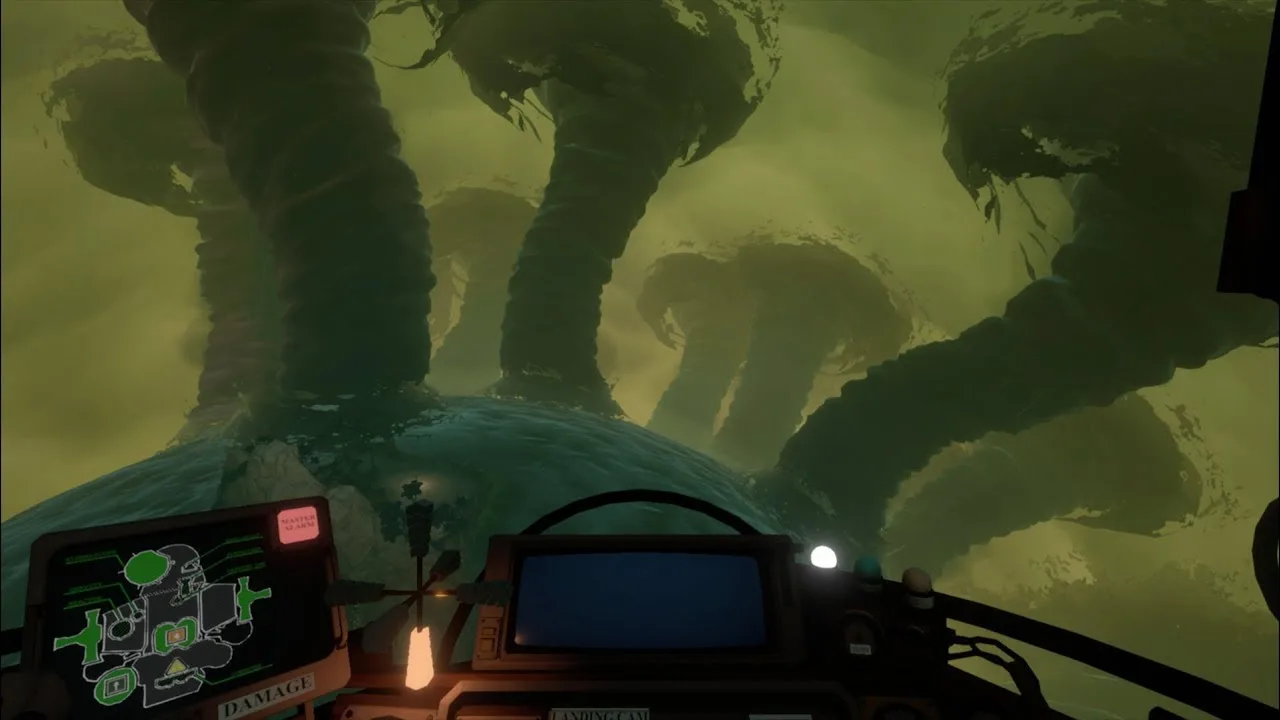
Giant's Deep surrounds its islands with a worldwide ocean, strong gravity, powerful currents, and swirling cyclones. The islands drift across the water, and passing storms can launch them into suborbital flight.
Keep nearby cyclones in view while exploring an island. A landing site that looks settled can become airborne during your visit. Observe how the island moves before attempting a crossing or leaving your ship behind.
The ocean also contains a strong upward current. If repeated attempts to descend accomplish little, pursue another clue rather than spending the whole loop forcing the same maneuver. Other locations can supply the understanding needed to approach an obstacle differently.
Above the planet sits the Orbital Probe Cannon, a Nomai structure that fires a probe and breaks apart at the beginning of each loop. Its fragments continue orbiting Giant's Deep, giving you a separate destination to investigate alongside the ocean below.
Dark Bramble: Navigate a World That Breaks Spatial Rules
Dark Bramble combines an icy, shattered exterior with tangled vines, fog-filled chambers, and a portal network that distorts conventional space. Hostile anglerfish inhabit its interior.
Travel distance and visible space become difficult to judge here. A destination that appears straightforward can lead into another chamber through the bramble network.
Use your scout to look ahead and your signalscope to investigate transmissions. Gather information before committing to a route, particularly when fog prevents you from seeing what lies beyond an opening.
Give each expedition a clear objective. Investigating one signal or passage at a time makes it easier to understand the connections than wandering between chambers without a destination.
Other Celestial Bodies and Hidden Destinations
Several important locations sit outside the main planetary surfaces. Some follow unusual physical rules; others change with their position relative to the Sun.
The Interloper
The Interloper is an icy comet traveling along a highly elliptical orbit. When it passes close to the Sun, heat temporarily melts part of its icy crust.
Observe the comet during its close solar approach if ice blocks your investigation. Its position changes access, so timing matters here just as much as on the twins. Near the end of the loop, the expanding Sun engulfs it.
The Quantum Moon
The Quantum Moon appears around different planets and vanishes when unobserved. Landing on it requires understanding its unusual behavior.
Investigate clues about quantum phenomena before repeating a conventional landing attempt. Learning how this moon behaves is part of reaching it.
The Sun Station
The Nomai Sun Station occupies a very low orbit around the Sun. Its proximity makes a direct ship approach hazardous, and the expanding Sun eventually destroys it.
Account for its limited lifetime when planning an investigation. Spending most of the loop elsewhere can leave you without a station to visit.
The Stranger in Echoes of the Eye
The Echoes of the Eye expansion adds the Stranger, a concealed artificial vessel containing a ring-shaped habitat and a circular river.
Begin that investigation with the museum exhibit about the deep space satellite. The Stranger introduces another substantial exploration area within the solar system, with its own environments and mysteries.
Plan Each Loop Around One Question
Review your discoveries at the ship's computer before launching. Its log organizes discoveries by location and through a web of connections, while retaining that information across resets.
Before launching, choose one unanswered question and identify whether its destination rewards an early or later arrival. An Ember Twin cave and an exposed structure on Ash Twin call for different schedules.
Keep the tools you already carry involved in the investigation:
- Translator: Read Nomai writing to understand the ruins and find connected leads.
- Signalscope: Track audio transmissions across the solar system.
- Scout: Photograph and illuminate areas before entering them.
- Spacesuit gauges: Watch oxygen and jetpack fuel while away from the ship.
During flight, begin slowing before you reach your target. Your ship carries momentum, and collisions can disable components or destroy it. When damage is repairable, exit the ship and repair the affected component before continuing.
On foot, refill oxygen near trees and watch how much fuel a return trip will require. Give yourself enough room to investigate the next clue without turning the journey back into an emergency.
Continue with
 Outer Wilds Ship Log Guide: Symbols and Missing CluesUse the Outer Wilds ship log to follow rumors, read map symbols, and track down missing entries, with targeted tips for Chert, the Vessel, and other clues.
More in Exploration

Outer Wilds Dark Bramble Guide: Reach the Vessel Safely
Explore Outer Wilds Dark Bramble, avoid anglerfish, find Feldspar, and follow Escape Pod 3's trail to the Vessel with clear routes through the foggy seeds.
Outer Wilds Exploration Guide: Where to Go and Why
Use this Outer Wilds exploration guide to choose your next destination, read the ship's log, handle changing planets, and make each 22-minute loop count.
Continue exploring
Join the community
Official channels for news, updates and player help: